Travel
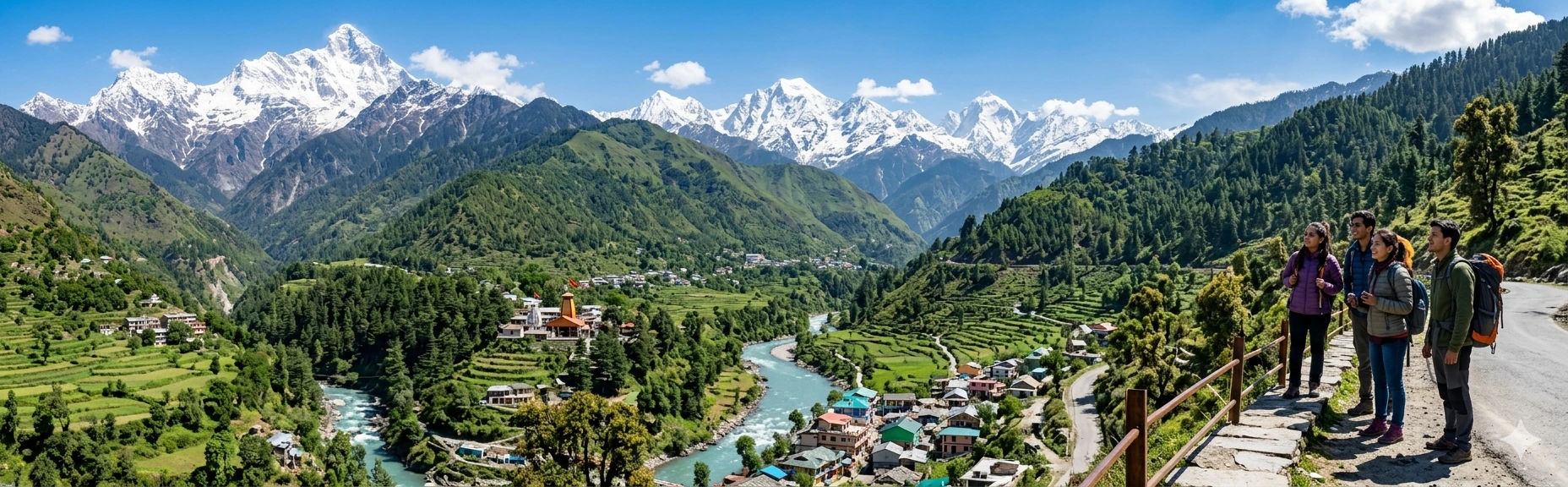
Okay, so here’s the thing about Uttarakhand — it’s not just a place. Not even close. People come expecting a hill station trip and leave realising they barely scratched the surface of an entire ecosystem of experiences. You’ve got the river towns, the ski resorts, the wildlife sanctuaries, the meadows at 4,000 metres where the only sound is wind. All in one state. First-timers almost always show up slightly confused about where to go, and I get it. The options genuinely don’t make the decision easy. So this guide is built around six places that cover the range — adventure, culture, wildlife, altitude — without pretending you can do all of them in one trip. Pick two. Three if you’re ambitious. Do them slowly. That’s the whole strategy.
I’ll be upfront — Rishikesh gets a lot of hype, and for once, the hype isn’t lying to you.
The town sits exactly where the Ganga stops being a mountain river and starts becoming something bigger. It rushes out of the hills here, fast and loud, and the sound of it follows you everywhere. The place is part spiritual hub, part adventure town, part chaotic backpacker circuit with cafes and yoga studios and ashrams all crammed along the banks. Somehow it works.
White-water rafting in the morning, Ganga Aarti by evening — that’s the standard day and it’s standard for a reason. The aarti especially, when it gets dark and the diyas start moving across the water, is one of those things that’s hard to describe without sounding dramatic about it. Laxman Jhula and Ram Jhula are the famous hanging bridges. Cross both. Go early, before the tourist crowd fills the narrow lanes.
One more thing — even if Rishikesh isn’t your final destination, you’ll probably end up here anyway. It’s where most routes into the Garhwal hills begin. Plan for it.
Location: Rishikesh, Dehradun District, Uttarakhand. About 45 km from Dehradun, 240 km from Delhi.
When to Go - Feb–May: Best overall window. Weather’s good, river’s raftable, town is lively. - Sep–Nov: Post-monsoon is genuinely beautiful here. Clear skies, calmer crowds, great aarti atmosphere. - Jun–Aug: Skip it. Rain, landslides, dangerous river currents. Not worth the risk.
Mussoorie has been doing this for 150+ years — receiving visitors, charming them, and sending them home wanting to return. There’s something about old hill stations that newer tourist spots just can’t replicate. The colonial buildings look lived-in, not renovated. The roads wind in ways that feel deliberate. Old hotels with fireplaces that have probably seen several generations of guests.
Mall Road has the Himalayan views on clear days — properly clear days — and that’s not nothing. But the real version of Mussoorie, the one worth finding, is Landour. It’s the quieter cantonment area just above the main bazaar. Ruskin Bond lives there. The lanes are narrow and lined with old deodar trees and the whole place feels like a different decade entirely. If you go to Mussoorie and skip Landour, you’ve missed the best part.
Kempty Falls? Go if you want. But weekends it’s a madhouse, and the falls themselves don’t quite justify the crowd. Gun Hill walk is better.
Location: Mussoorie, Dehradun District, Uttarakhand. 35 km from Dehradun.
When to Go - Mar–Jun: Peak season, everything open, views are good, manageable crowds on weekdays. - Oct–Dec: My honest preference — fewer people, mountain views are sharper, and December sometimes brings snow. - Jul–Aug: Fog and rain make the hills disappear. Save it for another time.
Nainital wraps itself around a lake. That’s not a metaphor — the town literally curves around Naini Lake on all sides, and the lake is the reason for everything here. The boating is touristy, yes, and you’ll share the water with a hundred other people on a busy day. But early morning, maybe 7am, when the mist hasn’t fully lifted yet — that’s when you understand why this place has been popular for over a century.
Naina Devi Temple on the north shore is worth a quiet visit. Snow View Point at 2,270 metres gives you the panorama everyone comes for. And if you can, go on a weekday. Nainital on a summer weekend is a different, significantly more stressful experience. The traffic on the approach road alone can add hours to your journey.
The shoulder months — October, November, early March — are genuinely the sweet spot here. You get the scenery without the chaos.
Location: Nainital, Nainital District, Uttarakhand. 300 km from Delhi, 65 km from Kathgodam railway station.
When to Go - Mar–Jun: Busy but beautiful. All facilities are running, weather is comfortable. - Oct–Nov: Calmer, cleaner air, lovely light on the lake in the afternoons. - May weekends: Actively avoid if you can. Overcrowded, expensive, gridlocked.
Jim Corbett is the oldest national park in India. Let that sit for a second. Over a century of protection, which is why the forest here feels different — denser, more alive, less touched.
You might see a tiger. You might not. That’s the honest answer — no guide or safari operator can promise you a sighting, and anyone who does is selling you something. What I can tell you is that even without a tiger, Corbett delivers. The sal forest alone is worth it. The riverbeds and grasslands. The 600+ bird species that’ll make you wish you’d brought better binoculars. Morning safaris are generally your best bet for big cats. The Dhikala zone gives you the most varied terrain, but it fills up fast — book that one months ahead, not weeks.
The park itself is well-managed by Indian standards, which you’ll notice immediately. Fewer vehicles per zone, actual rules that get enforced. It makes the experience significantly better.
Location: Jim Corbett National Park, Ramnagar, Nainital District, Uttarakhand. 260 km from Delhi, 50 km from Ramnagar.
When to Go - Nov–Jun: Park is accessible. Best sightings happen as vegetation thins and animals cluster near water. - Feb–May: Peak tiger-spotting window. Dry heat brings animals into the open. - Jul–Oct: Most zones, including Dhikala close completely. Dhikala shuts from July 15 to November 15.
Auli is India’s ski destination. That sentence would’ve sounded strange to most people twenty years ago, but it’s genuinely true now. The slopes sit at 2,500–3,050 metres in the Garhwal Himalayas, and in January or February when the snow’s right, this place looks like the kind of destination you’d see in a European travel reel and assume wasn’t accessible from Delhi. It’s about ten hours away. Accessible is exactly what it is.
The gondola here — longest and highest in Asia — operates year-round, which means even non-skiers can get up there and take in the Nanda Devi views without doing anything more strenuous than standing in a cable car. Those views, by the way, are absurd. Nanda Devi at close range is a different experience from seeing it from far away.
Come summer, the ski slopes become meadows and the trek to Kwani Bugyal above the resort is one of the more underrated walks in the region. And a practical note: Auli is cold even in “warm” months. The altitude does that. Pack more layers than you think you need.
Location: Auli, Chamoli District, Uttarakhand. 16 km from Joshimath, 340 km from Rishikesh via Devprayag.
When to Go - Jan–Mar: Ski season. Best snow, slopes running, absolutely stunning to look at. - Apr–Jun: Green meadows, clear skies, excellent trekking. - Jul–Sep: Rain and fog. Roads get difficult and views disappear. Not ideal.
Ask most first-time Uttarakhand visitors about Chopta and they’ll draw a blank. That’s kind of the point.
This place sits at 2,680 metres inside the Kedarnath Wildlife Sanctuary and it has a quality that’s hard to pin down in writing — a kind of complete stillness that feels earned rather than just remote. The meadows here are genuinely beautiful in a way that doesn’t need anything added to them. No activities, no itinerary. Just the meadow and the peaks.
The trek to Tungnath is the obvious reason most people come. It’s the highest Shiva temple in the world at 3,680 metres, about 1.5 to 2 hours on foot from Chopta. From there, pushing up to Chandrashila peak at 4,000 metres takes another 30–45 minutes and gives you a full Himalayan panorama — Nanda Devi, Trishul, Kedarnath, Chaukhamba. On a clear day it’s one of those views that makes everything feel worth it.
But even if you don’t trek, just being in Chopta for a morning is something. It’s a very small, very cold, very quiet place and that’s precisely what makes it special.
Location: Chopta, Rudraprayag District, Uttarakhand. About 90 km from Rudraprayag, 220 km from Rishikesh.
When to Go - Apr–Jun: Rhododendrons blooming, higher trails clearing, Tungnath temple open again after winter. - Sep–Nov: Post-monsoon is stunning here. Clear views, cool temperatures, great for trekking. - Dec–Mar: Heavy snow closes the road for most people. Tungnath shuts for winter. Those who make it in say it’s spectacular — but plan accordingly.
The biggest mistake on a first Uttarakhand trip is trying to do too much. Five destinations in ten days sounds reasonable until you’re on the fourth mountain road in a row and the excitement has worn off. Two places, done properly, will give you a far better sense of what this state actually is. Rishikesh for the energy and the river. Mussoorie for the old-school hill station feel. Corbett if wildlife drew you here. Nainital for the lake and the ease of it. Auli for altitude and silence and views. Chopta for the kind of quiet that’s hard to find anywhere near a city. Most people come back for what they missed. That’s not a bad outcome.